
Ideas and concepts in copyright law
Contrary to these deceptive associations, however, ideas and concepts are not protected by copyright.

Contrary to these deceptive associations, however, ideas and concepts are not protected by copyright.
This follows from the principle set out in the Act on Copyright and Related Rights, according to which: only the manner of expression may be protected; discoveries, ideas, procedures, methods and principles of operation, and mathematical concepts are not protected**.
An idea and its expression Copyright law has adopted a particular approach that separates the notion of an idea, a concept, or a principle of operation from the notion of its expression.
This approach is based on the so-called idea-expression distinction, also known as the expression dichotomy.
In connection with this principle, a distinction must be drawn between elements such as a concept, an idea, and a method of operation on the one hand, and the expression of a concept, the expression of an idea, or the expression of a method of operation on the other.
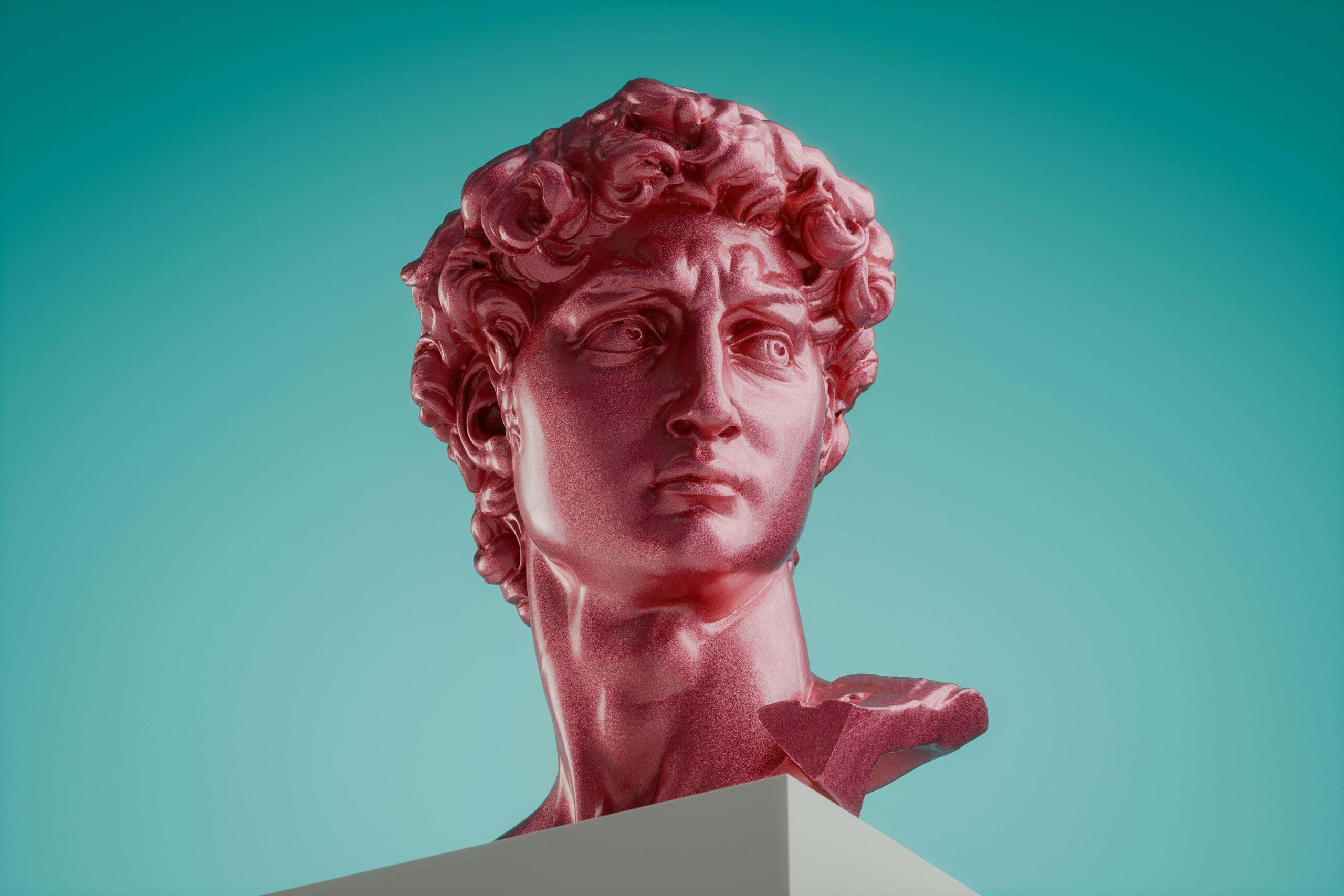
In practice, this means that an idea alone cannot be protected by copyright, and to obtain such protection it must be expressed in some form, for example: a photograph, a song, a painting, a sculpture, or a video game.
What does this mean in practice?
In practice, this means that an expression may be protected by copyright, provided of course that it meets the requirement of originality and individuality.
Why does the Act on Copyright and Related Rights provide for such an approach?
Although this approach may seem complicated, in practice it comes down to a very pragmatic matter.
If ideas, concepts, or principles of operation were granted the status of a protected work, certain solutions would become monopolized in the hands of whoever first applied them.
Thus, the first photographer to take a picture of a model in a given pose could obtain a monopoly on that idea and prohibit other photographers from taking pictures based on the same concept.
Similarly, in the case of games, it could be argued that if one game developer created a game based on a particular mechanic, no subsequent developer could use it.
Such an approach would grant a kind of monopoly over an idea, thereby limiting creative freedom and discouraging development.
Wondering how to use photographs online safely?
In the post titled
Photographs, or how to safely use stock photos? we discuss the conditions for using photographs safely.
Summary Discoveries, ideas, procedures, methods and principles of operation, and mathematical concepts are not protected by copyright.
The manner of expressing a given idea may be protected by copyright.
Granting copyright protection to ideas, concepts, or principles of operation could lead to the monopolization of certain solutions and undermine creative freedom. ** Art. 1(2)(1) of the Act on Copyright and Related Rights.
Have a question?
Let's talk. A 20-minute conversation.
No briefs, no forms.
We'll give you a straight answer.
Schedule a call → See more articles

dotlaw is an AI-native law firm for technology companies. Specializations: AI Act, GDPR, MiCA, ISO 27001, IT contracts, M&A in tech.
Meet the author